Rebuilding A Part Of Aviation History
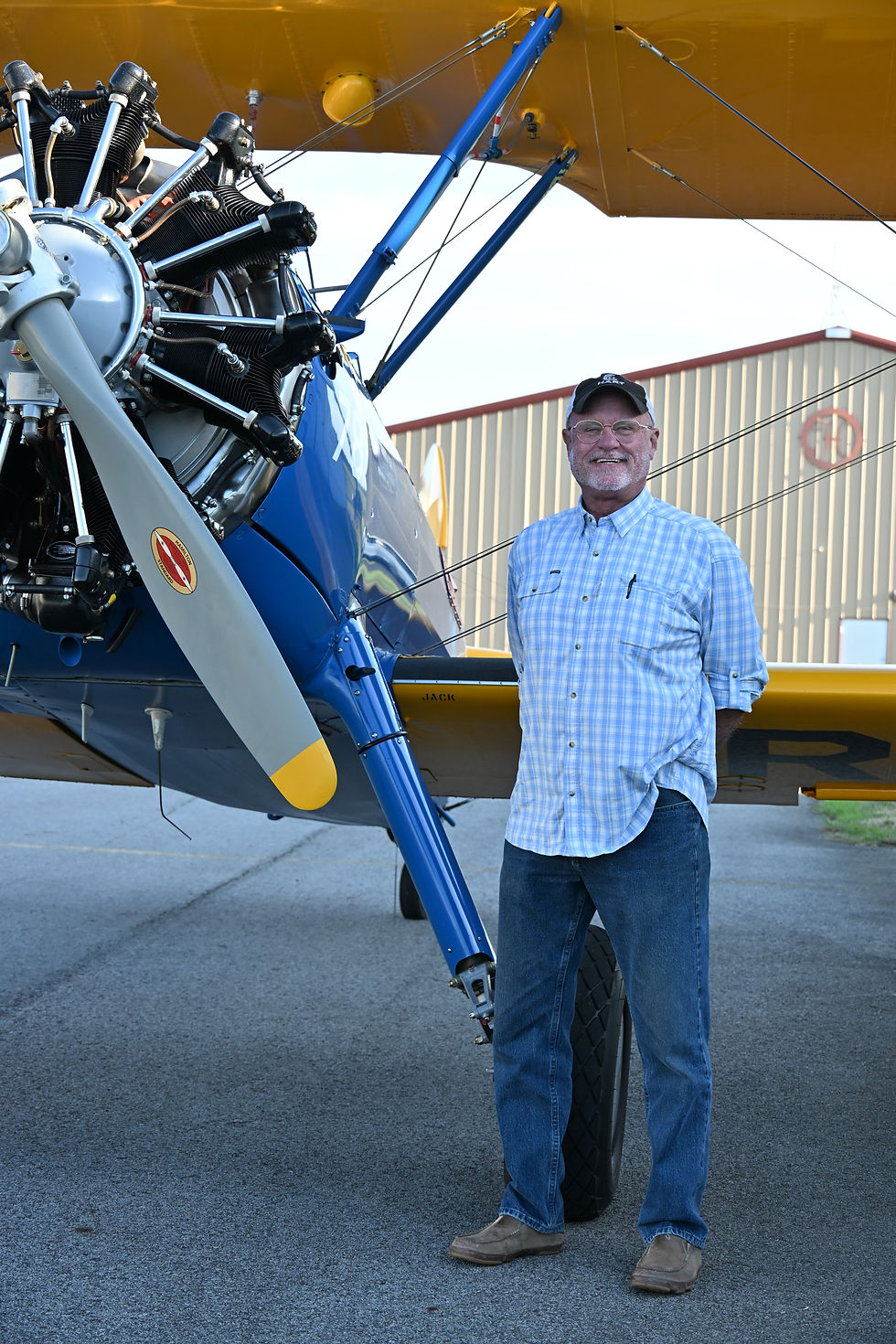
Dr. Phil Hart’s Antique Stearman Airplane
By Jennifer Webb

Dr. Phil Hart noticed that it was quiet at the airport on a perfect spring day. Maybe he should do it now? His three-year project of rebuilding a PT-17 1942 Stearman biplane was complete. He’d had two FAA inspectors out, and he’d gotten his airworthiness certificate. He is a certified A&P Mechanic with Inspection Authorization. The first flight would be fine. Probably. He had a whole list of people who wanted to come out and see its first flight, but that idea made him a bit nervous. Should he just do it now? Today?
He had started the engine before and was fairly certain all the bugs were out, at least from what he could tell on the ground. The very first time he started it, there was a significant oil leak. He watched the oil pressure rapidly drop and quickly shut it off before it could do any damage. That was fixed now.
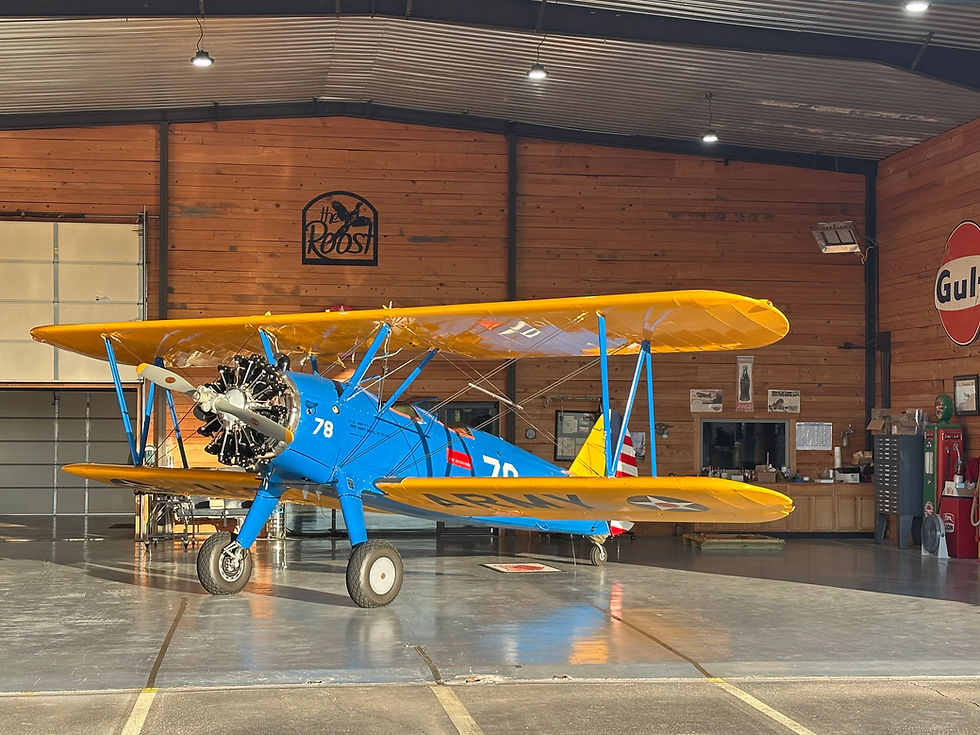
He took a breath and decided that yes, today was the day! He pulled the plane out of the hangar and climbed into the second seat of the cockpit, where the pilot sits to solo a Stearman biplane. The 275 hp Jacobs engine roared to life. Oil pressure was good—steady and holding. He taxied out to the runway and performed all his normal systems checks. Everything was good.
It was time to fly!
Though it was his first flight in this particular Stearman, he knew this feeling all too well, and he had missed it. This was his second Stearman project. He had instant regret at selling his first one, a yellow navy version of the same airplane. It was good to be back in the cockpit and to feel the control stick in his hand.
The extra horsepower in the engine gave him a boost, and the plane leapt into the air, almost as if it had longed to be back in the sky as much as Phil had. He could feel the wind and hear it whipping past the flight wires that connected both sets of wings. Better test the smoke system too— he’d always wanted one of those, and it was a feature that his first Stearman didn’t have. It worked perfectly.
The first flight went without a hitch. He noted a few minor corrections and adjustments that needed to be made. When he landed, he felt both joy and relief. He would have to explain to his friends that they missed the first flight, but he was glad that he had followed Joe Faith’s advice and just gone ahead and flown it first with no one else around.
If someone had been around, they would have seen what comes to mind as a classic biplane. (Stearmans have been featured in movies such as “Second Hand Lions” and “Pearl Harbor.”) This particular one was the Army version, and like most Stearmans, had been used to train soldiers to fly in World War II.
Learning to fly in a taildragger biplane was notoriously difficult. The yellow Navy versions, like his first Stearman, were known as “Yellow Peril.” Taildragger airplanes are notorious for “ground looping,” where the tail of the airplane spins around. It’s an “uncontrolled rotation of an aircraft while on the ground” (dictionary definition). For the pilot—and instructor, if it’s a student pilot—it also means heart-pounding terror and potentially wrecking your plane on the ground. Now, pilots have to get a special tailwheel endorsement to fly aircraft that have two wheels in the front and one smaller one on the tail of the airplane. In the 40s, that was just what you learned to fly in. George H. W. Bush learned to fly in a Navy Stearman, very similar to Dr. Hart’s first project.
Back in the hangar, Phil remembered his journey in rebuilding this airplane. He had known about it for some time. It was sitting in the back of a hangar at Millington, TN. The previous owner would get excited and work on it for a few months, then lose enthusiasm and take a break. That continued for 17 years. “Let me know if you ever decide you want to sell that project,” Dr. Hart told him. The plane was in pieces. Every part that could be taken off was off. But the fuselage (the main body of the aircraft) already had all the rust and corrosion removed and had been painted; it was just dusty.
Dr. Phil Hart got a call two weeks later. “Well, the wife and I talked about it, and we decided it’s time to sell that airplane.” Dr. Hart didn’t even try to negotiate the price. It took him three trips with a 16-foot trailer to bring it all back, but he got every piece.
Boeing mass-produced around 10,000 Stearman aircraft in the 40s for the military, but after World War II, the Reconstruction Finance Corporation sold many of them as military surplus. Most Stearmans were refitted as crop dusters, but between the chemicals and leaving fabric-covered airplanes out in the weather, this took its toll. There are currently estimated to be around 1,000 in flyable condition in the United States.
His wife, Sherry, was not surprised that the project consumed him. It had taken him nine years to rebuild his first one. This one took a bit over three years. Though she does not care for flying in the Stearman, she and Phil have had their share of aviation adventures, flying and traveling in another aircraft that he owned with a partner. Their son, Adam Hart, is also a pilot.
Dr. Hart did much of the work in the shop at his house. He had to build one more wing, but the others were already done. The frame for the wings is mostly wood, with some metal pieces to reinforce it. He covered each one with Dacron polyester and shrunk it to fit with an iron. He reinforced all the edges with a special tape and painted it in the original colors with polyurethane paint. The fabric was a huge upgrade from the original cotton. If kept indoors and maintained well, the taunt fabric covering can last over 30 years.
It was painstaking work, and he was happy to be done with it, but as he worked, memories of his yellow Stearman came to mind. He had taken it to several airshows and might have performed some acrobatics in it while flying alone. Taking people up for the first time in a biplane is always a thrill. There is a mirror situated in the front seat where the pilot can see their faces from the back seat. All he usually sees is teeth from their smiles as he takes them up for the first time. (Since he is a dentist by trade, he did not mind looking at teeth.)
He looks forward to doing all those things with his new Stearman as well, as soon as he gets a few more hours on the engine.
Read the full issue below.


